
The Post-Financial Independence Life No One Talks About
I used to think hitting financial independence would flip some internal switch. That I'd wake up one day and suddenly operate differently—more sophisticated, more intentional, more free. I had a clear picture in my head of what post-FIRE life would look like.
Turns out, the reality is messier than the spreadsheet ever predicted.
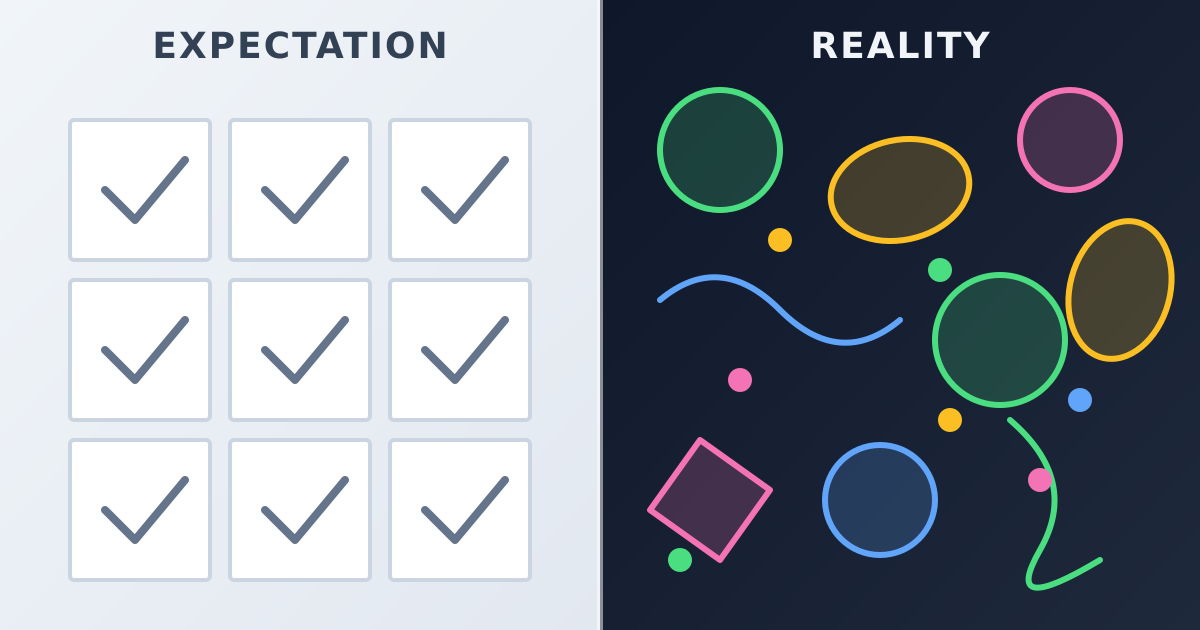
What I Thought Would Happen
I imagined I'd reorganize everything into dividend aristocrats, index funds, and real estate. Steady, boring, income-generating assets. The "responsible" post-FIRE portfolio that throws off passive income while I sleep. I had it all mapped out—the careful restructuring, the diversification, the quarterly rebalancing.
I thought I'd become more financially sophisticated. More time meant more learning, right? I'd finally dig into tax optimization strategies, read the white papers, understand the nuances of estate planning. I'd level up from "guy who saved a lot" to "guy who actually knows what he's doing."
I thought I'd have more time for hobbies, personal development, and family. This was the big one. All those years of grinding, I told myself it would pay off with freedom. Freedom to master a craft. Freedom to be present. Freedom to pursue the things I'd been putting off.
I thought I'd buy whatever I want. Not recklessly—but without the mental gymnastics. I figured once I hit my number, the anxiety around big purchases would just dissolve. I even set artificial milestones: hit $X million, buy the truck. Simple.
That was the vision. Here's what actually happened.
What Actually Changed
My allocation is exactly the same as it was before. All that planning to restructure into dividend aristocrats and real estate? Never happened. I just let everything ride this AI wave instead. I've become complacent—less sophisticated, if anything. Part of me thinks that's fine. Another part wonders if I'm leaving money on the table.
I stopped budgeting completely. This one still feels strange to admit. I used to track every transaction, categorize spending, analyze trends. Now? I pay credit card bills on time and make sure the checking account stays above a certain number. That's it. The anxiety around every dollar just... evaporated. Not because I became more sophisticated, but because I stopped caring as much.
I stopped following the stock market every single day. I never made daily moves anyway—I was a buy-and-hold guy through and through. But I used to want to understand every tick, every movement, every headline. That obsession quietly faded. The portfolio does what it does.
I stopped being cheap on my hobbies. For years, I'd agonize over discretionary spending. Now I've accepted that my hobby costs around $500 a month, and I've stopped laboring over whether it's "worth it." In the grand scheme of things, it's a drop in the bucket.
But that extra time I imagined? It doesn't exist. We just welcomed our fourth baby this week. Life is never as simple as the plan. My time is completely consumed by family, and whatever scraps remain go toward hobbies. I expected to get really good at my craft with all this "freedom," but consistency isn't there. I'm still making strides, still learning—but the dedicated practice time I imagined doesn't exist. Maybe it's just this phase of life. Maybe I need an external forcing function. I'm still figuring it out.
And buying whatever I want? Still hard. I currently want a $90k truck. I set that artificial milestone—hit $X million, and I'd pull the trigger. I've since surpassed that number by $500k. Still haven't bought the truck. I keep asking myself: Is it worth it? Will I actually use it? Do I even care that much? It's surprisingly hard to let go of that much money, even when the math says it doesn't matter.
I'm not investing $30k a month anymore. I left big tech, which means the cash flow isn't what it used to be. Now it's maxing out the 401k and monthly investments into VOO. Nowhere near the firepower I had before. But that trade-off bought me flexibility—and it freed me up to build again.
I'm getting back to building for the FIRE community. I took a year-long detour building other things—random projects, different audiences. But recently, I've renewed my interest in creating something specifically for this community. Working on a product called SpendSense (though the domain is taken—any recommendations?). More on this soon.
FIRE Update
Despite all of this—the complacency, the lack of restructuring, the $90k truck I can't pull the trigger on—I'm currently ahead of my net worth projections by $2,646,968.82.
I still check once per weekday and compare where I am to where I'm supposed to be. Old habits. But the gap keeps widening in the right direction, even without the $30k monthly investments, even without the "sophisticated" moves I thought I'd be making by now.
Sometimes the best strategy is just getting out of your own way.
My Take
The gap between expectation and reality isn't a failure—it's just what happens when life keeps moving after you hit the number. FIRE gave me options, but it didn't hand me a new personality or suddenly make decisions easier. I'm still the same person who built the spreadsheet, just operating in a different context now.
If there's a takeaway here, it's this: hitting your number doesn't mean you've figured everything out. You'll still have contradictions. You'll still labor over purchases that "shouldn't" matter. You'll still check your net worth more than you probably need to. And that's okay. The freedom isn't in becoming a different person—it's in having the space to figure out who you actually want to be.
Still figuring it out. But at least now I get to figure it out on my own terms.
Enjoyed this post?
Subscribe to get my latest posts on financial independence, investing, and the journey to FIRE delivered straight to your inbox.
More Posts

10 Tips to Survive Tech Layoffs

Trump Accounts: Free Money for Your Kids (And How to Maximize It)

Comments